
Malawi and Tanganyika cichlids are two popular groups of freshwater fish often kept by hobbyists. Both come from the African Great Lakes but have distinct characteristics that set them apart. Understanding these differences can improve how they are cared for.
The primary differences between Malawi and Tanganyika cichlids include their habitat preferences, body shapes, coloration, behavior, diet, breeding methods, and water chemistry requirements. These factors influence their care, compatibility, and aquarium setups significantly.
Learning these distinctions will help you choose the right species for your tank and provide the best environment for their health and growth.
Habitat Preferences and Water Conditions
Malawi cichlids come from Lake Malawi, known for its rocky shores and clear, alkaline water. They prefer a stable environment with a pH between 7.8 and 8.6 and warmer temperatures around 76-82°F. The lake’s rocky structure offers many hiding spots and breeding sites. Tanganyika cichlids live in Lake Tanganyika, which is deeper and has a more varied environment, including sandy bottoms and rocky outcrops. The water in Tanganyika tends to be slightly harder and more alkaline, with pH levels between 8.0 and 9.0. Temperatures here range from 75-81°F. Both lakes have stable, mineral-rich water, but Tanganyika species often require even higher mineral content. These differences mean that their aquariums need to be set up with careful attention to water parameters to keep each species healthy.
Maintaining the right pH and hardness is essential to mimicking their natural habitats. Adjustments may be needed based on the lake of origin.
Proper habitat replication reduces stress and encourages natural behaviors, making care easier and more rewarding.
Body Shapes and Coloration
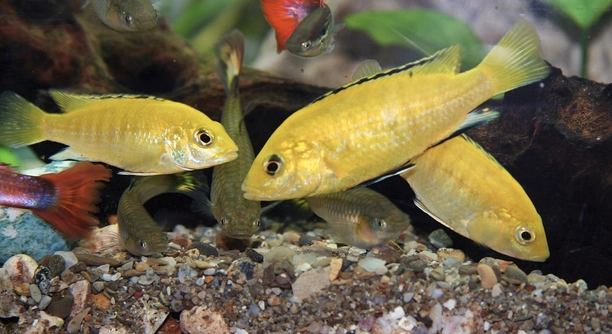
Malawi cichlids generally have more robust, laterally compressed bodies with vivid, bright colors ranging from blues and yellows to reds. Their striking patterns often make them stand out in an aquarium. Many Malawi species are known for their bold coloration and aggressive displays during territorial or breeding periods. Tanganyika cichlids show greater variety in body shapes, including elongated or more streamlined forms. Their coloration is often more subdued, with earthy tones, stripes, or spots that help them blend into the rocky or sandy environment. Some species, however, do display bright colors, but overall, their patterns are more subtle than Malawi cichlids. These physical differences reflect adaptations to their specific environments, with Malawi cichlids relying more on vivid colors for communication and Tanganyika cichlids depending on camouflage for protection.
Understanding the physical traits helps when selecting species for aquariums based on appearance and behavior compatibility. It also guides tank design to suit their natural tendencies.
Choosing species with complementary shapes and colors can enhance visual appeal while maintaining a balanced community aquarium.
Behavior and Temperament
Malawi cichlids tend to be more aggressive and territorial. They often establish clear dominance hierarchies, especially males during breeding. Tanganyika cichlids usually show more varied social behaviors, with some species being quite peaceful and others territorial. Understanding their temperament is important for aquarium compatibility.
Malawi cichlids are known for their boldness and frequent territorial disputes. Males aggressively defend their breeding sites, and aggression can escalate if tank size or hiding places are insufficient. They may chase other fish, especially those with similar colors or shapes, to assert dominance. This behavior requires keeping them in larger tanks with plenty of rocks and caves to reduce stress. Tanganyika species, while still territorial, often form more complex social groups. Some are rock dwellers that defend small territories, while others are sand dwellers that may tolerate neighbors better. Tank mates should be chosen carefully to avoid conflicts.
Providing ample space and hiding spots is essential for both types to thrive. Regular observation helps catch and manage aggressive behavior early, ensuring a peaceful aquarium.
Diet and Feeding Habits
Malawi cichlids mostly feed on algae, small invertebrates, and zooplankton in the wild. They benefit from a diet rich in vegetable matter, with occasional protein supplements to mimic their natural intake. Tanganyika cichlids have a broader diet range. Some species graze on algae and biofilm, while others prefer small crustaceans, insect larvae, or even other fish. Their feeding habits reflect their varied habitats and niches within the lake.
Feeding Malawi cichlids requires balancing plant-based foods with high-quality protein pellets or flakes designed for herbivores and omnivores. Overfeeding protein can cause health issues, so it’s important to match diet to species. Tanganyika cichlids often need specialized diets depending on their species. Algae grazers benefit from spirulina-rich foods and occasional live or frozen treats. Predatory species require more protein-focused diets, including small crustaceans or insect larvae. Offering varied food types helps prevent nutritional deficiencies and encourages natural foraging behavior, improving overall health and coloration.
Consistent feeding schedules and monitoring appetite ensure the fish stay healthy and active. Avoiding excess food helps maintain water quality, which is crucial for both cichlid groups.
Breeding Methods
Malawi cichlids are mostly maternal mouthbrooders. Females carry fertilized eggs and fry in their mouths for protection. This method increases survival rates by keeping offspring safe from predators.
Tanganyika cichlids show more varied breeding styles. Some species are also mouthbrooders, while others lay eggs on rocks or in caves, guarding them closely.
Compatibility and Tank Setup
Malawi cichlids need spacious tanks with rocky shelters to reduce aggression. They thrive best when kept with similarly sized and temperament species. Open swimming areas are also important to accommodate their active nature.
Lifespan and Growth
Both Malawi and Tanganyika cichlids can live 7 to 10 years with proper care. Growth rates depend on species, diet, and tank conditions. Regular maintenance supports their longevity.
Water Chemistry Sensitivity
Tanganyika cichlids tend to be more sensitive to water chemistry changes than Malawi species. Stable parameters are crucial for their health and stress reduction.
FAQ
What are the main differences between Malawi and Tanganyika cichlids?
Malawi cichlids are typically more aggressive with bright, bold colors and prefer rocky habitats. Tanganyika cichlids have more varied body shapes and coloration, often more subdued, and show diverse breeding and social behaviors. Their water chemistry needs also differ, with Tanganyika species requiring higher mineral content.
Can Malawi and Tanganyika cichlids be kept together?
It is generally not recommended. Their differences in temperament, water chemistry preferences, and habitat needs can cause stress and health problems. Malawi cichlids’ aggression may overwhelm the more peaceful Tanganyika species. Keeping them in separate tanks allows better control of their specific requirements.
What type of tank setup works best for Malawi cichlids?
A tank with plenty of rocks and caves to establish territories is ideal. The water should be warm, alkaline, and hard. Open swimming space is important because Malawi cichlids are active swimmers. Regular water changes and a strong filtration system are necessary to maintain water quality.
How should Tanganyika cichlids be housed?
Tanganyika cichlids benefit from a tank mimicking their lake’s varied environment, including sandy areas and rocky shelters. Water should be hard, alkaline, and stable in temperature. Different species might need specific setups, so researching each species’ natural habitat helps create the best conditions.
What is the best diet for these cichlids?
Malawi cichlids thrive on a diet rich in vegetable matter with occasional protein. Tanganyika cichlids have diverse diets depending on species—some need algae-based food while others require more protein. Providing varied, high-quality foods ensures good health and coloration.
How often should I feed my cichlids?
Feed small amounts 1-2 times daily, ensuring they consume all food within a few minutes. Overfeeding can harm water quality and fish health. Observe their behavior to adjust feeding frequency as needed.
Are mouthbrooders easier to breed?
Mouthbrooding Malawi cichlids protect their young by carrying eggs and fry in their mouths, which increases survival. Tanganyika cichlids include both mouthbrooders and substrate spawners, requiring different care during breeding. Mouthbrooders generally need less intervention but still require proper tank conditions.
What are common health issues in Malawi and Tanganyika cichlids?
Poor water quality is the leading cause of illness, leading to infections and stress. Malawi cichlids may suffer from fin rot and parasites due to aggression and injuries. Tanganyika species can be sensitive to changes in water chemistry, making them prone to stress-related diseases.
How can I reduce aggression in Malawi cichlids?
Provide plenty of hiding spaces and adequate tank size. Keeping more females than males helps lower territorial disputes. Avoid mixing species with very different aggression levels to minimize conflicts.
What tank size is recommended for these cichlids?
A minimum of 55 gallons is recommended for Malawi cichlids due to their activity and territorial behavior. Tanganyika cichlids require at least 40 gallons, but this depends on species and group size. Larger tanks support healthier social structures.
How important is water testing for these cichlids?
Regular water testing is essential to maintain the proper pH, hardness, and temperature. Both Malawi and Tanganyika cichlids need stable conditions to thrive. Sudden changes can cause stress and illness.
Can I keep other fish with these cichlids?
It depends on the species and temperament. Malawi cichlids may attack smaller or less aggressive fish. Tanganyika cichlids vary, but it’s best to choose tank mates with similar water needs and compatible temperaments.
What are signs of stress in these cichlids?
Signs include loss of color, hiding, loss of appetite, and erratic swimming. Stress often results from poor water quality, aggression, or unsuitable tank conditions. Early intervention improves recovery chances.
Is it necessary to mimic their natural habitat exactly?
While exact replication isn’t always possible, closely matching water parameters, tank structure, and diet improves their health and behavior. Small adjustments may be needed over time based on observation.
How often should I perform water changes?
Weekly water changes of 20-30% help maintain water quality. This routine reduces harmful waste and keeps water chemistry stable, which is crucial for both cichlid types. Avoid large, sudden changes to prevent stress.
Final Thoughts
Malawi and Tanganyika cichlids each bring unique qualities that make them interesting and rewarding to keep. Both groups require specific care that reflects their natural habitats, including water chemistry, diet, tank setup, and social environment. Paying attention to these details helps maintain their health and natural behavior. While Malawi cichlids are known for their bright colors and strong territorial instincts, Tanganyika cichlids offer a wider variety of body shapes and behaviors, often with more subtle coloration. Recognizing these differences is important when planning your aquarium to meet the needs of each species.
Understanding the distinctions between Malawi and Tanganyika cichlids also helps avoid common problems such as stress, disease, and aggression. Each species has adapted to its lake environment in ways that influence how it behaves in captivity. For example, Malawi cichlids generally require more space and hiding spots to reduce aggression, while Tanganyika cichlids might need a tank that better mimics their natural combination of rocky and sandy areas. Water parameters such as pH, hardness, and temperature should be regularly tested and adjusted if necessary to provide stable conditions. Feeding habits differ too, with Malawi cichlids leaning toward vegetable-rich diets and Tanganyika cichlids varying based on species.
Choosing which cichlids to keep depends on your personal preferences, available tank space, and willingness to manage their unique needs. Both Malawi and Tanganyika cichlids can be hardy if cared for properly, but they do require commitment. Providing the right environment and nutrition encourages vibrant coloration, natural behaviors, and longer lifespans. Taking time to learn about their differences and requirements ensures a successful and enjoyable experience with these fascinating fish. With proper care, both types of cichlids can thrive and bring life and activity to your aquarium.

Hello,
If you enjoy the content that we create, please consider saying a "Thank You!" by leaving a tip.
Every little bit helps us continue crafting quality advice that supports the health, happiness, and well-being of pets around the world, for pets of all shapes, sizes, and species.
We really appreciate the kindness and support that you show us!