
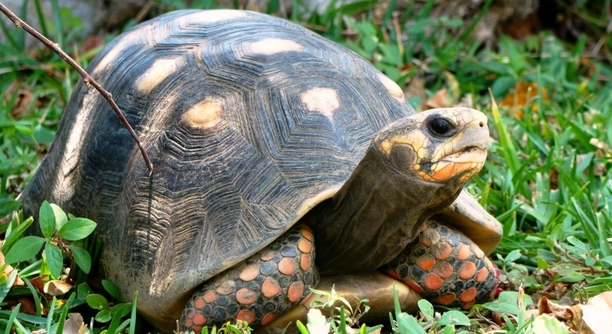
The right tank size for a red-footed tortoise depends on its age and size. Ensuring your pet has enough space is essential for its growth, health, and well-being. This guide will help you choose the perfect tank size.
For hatchlings and young red-footed tortoises, a 40-gallon tank is suitable. As they grow, the tank should increase to at least 75-100 gallons for juveniles, and 120-150 gallons for adults. Proper space is crucial for their mobility and overall health.
Choosing the right tank size can make a big difference in your tortoise’s life. We’ll guide you through selecting the best size for each stage of your tortoise’s growth.
Tank Size for Hatchlings (0-6 Months)
When it comes to red-footed tortoise hatchlings, the space you provide plays a critical role in their development. A 40-gallon tank is the minimum recommendation, as it gives them enough room to explore and grow. Hatchlings need a habitat that offers both shelter and room to roam.
In a 40-gallon tank, you can provide various environmental elements like hiding spots, climbing structures, and water dishes. Hatchlings also need a proper heat gradient, so place a heat source at one side of the tank. Make sure to maintain the humidity level around 70-80%.
During the first six months of their life, tortoises grow quickly, and their need for space will increase. Be prepared to upgrade their habitat as they approach their juvenile stage. A properly sized tank helps prevent stress and encourages healthy growth. As your hatchling gets bigger, a tank upgrade will become inevitable.
Tank Size for Juvenile Tortoises (6 Months – 2 Years)
For juvenile red-footed tortoises, a 75-gallon tank is recommended. This size allows them to move around and exercise, which is important for their health.
Juvenile tortoises need more space to accommodate their increased size and energy levels. You can start adding more enrichment items like logs and plants. They will enjoy the added stimulation of a larger environment.
Tank Size for Sub-Adults (2-5 Years)
For sub-adult red-footed tortoises, a 100-gallon tank is ideal. At this stage, they are growing quickly and need ample space to move and explore.
A 100-gallon tank allows for a more enriched environment with additional items like climbing structures, logs, and plants. It helps to have multiple areas in the tank for basking, hiding, and roaming. Ensure proper humidity and temperature gradients to support their health. A larger tank helps avoid stress and supports their growing size.
While they may not be fully grown, they will require more space than before. Consider adding more decorations and substrates to provide a more naturalistic environment for them. Proper space at this stage will help prevent stunted growth and obesity.
Tank Size for Adults (5+ Years)
When your red-footed tortoise reaches adulthood, a 120-150 gallon tank is essential. This size provides the necessary space for an adult to move comfortably.
Adult tortoises can grow quite large, and they need enough room to walk, dig, and stretch out fully. Their enclosure should have a heat source, UVB light, and plenty of hiding spots. Additionally, adding more space allows for better airflow and maintains proper humidity levels. Providing an adult with a spacious tank promotes healthier habits and reduces stress.
Tank Dimensions for Proper Growth
When setting up a tank, it’s not just the volume that matters, but the dimensions. A wider tank provides better opportunities for movement and exploration, which is essential for your tortoise’s physical and mental well-being.
Tortoises thrive in environments that offer space to roam, so consider a tank that is longer than it is tall. A long, spacious tank encourages natural behaviors like walking, climbing, and foraging. This setup supports their physical development, ensuring they stay active and healthy.
Tank Accessories for Enrichment
Adding accessories to your tortoise’s tank creates a more stimulating environment. Items like rocks, branches, and plants help mimic their natural habitat.
Enrichment is key for mental stimulation. Tortoises enjoy hiding under leaves, climbing over logs, and foraging for food. Incorporating these items into their enclosure not only helps them stay active but also prevents boredom, which can lead to unhealthy behaviors.
FAQ
How do I know if my red-footed tortoise’s tank is too small?
If your tortoise seems stressed, isn’t moving around much, or displays abnormal behavior, the tank might be too small. A tortoise should have enough room to stretch out, explore, and find hiding spots. A cramped space can cause stress and hinder proper growth. Additionally, if your tortoise starts to develop abnormal shell growth, it may indicate that the space isn’t adequate for them to exercise and move freely.
What should I place in the tank to keep my tortoise healthy?
The essentials for a healthy tank include a heat source, UVB light, water dish, and a substrate like coconut husk or cypress mulch. Adding climbing structures, logs, and hiding spots also provides mental stimulation. Make sure the tank has proper ventilation and humidity control to maintain a healthy environment. Live plants like dandelions and clover can also enrich the space and provide some added variety to their diet.
How can I keep my red-footed tortoise tank clean?
To maintain cleanliness, spot clean daily by removing uneaten food, waste, and any bedding that looks soiled. Change the water regularly and clean the entire tank every 2-4 weeks, depending on the size and condition. Use reptile-safe disinfectants for cleaning. Scrub all surfaces, including the basking area, hide, and any accessories. Be sure to dry the tank thoroughly before setting it back up. A clean tank helps prevent bacteria and mold growth, which is crucial for your tortoise’s health.
How often should I upgrade my tortoise’s tank?
As your tortoise grows, their tank will need to be upgraded. For hatchlings, a 40-gallon tank is fine, but by the time they reach 6 months, you’ll need to upgrade to a 75-gallon tank. Once they reach adulthood (around 5 years), their tank should be at least 120 gallons. If they seem cramped or exhibit stress, it’s time for a larger tank. Providing ample space is essential for their long-term health and happiness.
Can I house multiple tortoises in the same tank?
Housing multiple red-footed tortoises in the same tank is possible, but there are a few things to keep in mind. Ensure the tank is large enough to allow each tortoise to have its own space to retreat. If they’re not provided with enough room, they may become territorial, leading to aggression. Always monitor the interaction between tortoises, especially during feeding time or when they’re getting used to one another. It’s often better to house them separately unless you have a very large enclosure.
What type of substrate is best for red-footed tortoises?
The best substrate is one that helps maintain humidity while being easy to clean. Options like cypress mulch, coconut coir, and orchid bark are popular choices. These materials mimic the natural environment and provide good moisture retention. Avoid using sand or gravel, as they can cause impaction if ingested. Keep the substrate deep enough for burrowing, especially as your tortoise gets older. You should also spot clean the substrate daily and replace it when it becomes soiled.
Do I need to add humidity to my tortoise’s tank?
Yes, maintaining the proper humidity is essential for your tortoise’s health. Red-footed tortoises come from humid environments, so it’s crucial to replicate this in their habitat. Keep the humidity level between 70-80%. You can achieve this by misting the tank daily or using a humidifier. Make sure the substrate retains moisture but doesn’t stay soaking wet. A humidity gauge will help you monitor the levels. Too little humidity can cause shedding problems, while too much can lead to mold growth.
How do I regulate the temperature in my tortoise’s tank?
Temperature regulation is key to a healthy environment. Red-footed tortoises require a warm basking area of 90-95°F and a cooler side around 75-80°F. Use a heat lamp or ceramic heat emitter to create a basking spot and a thermometer to monitor the temperatures. Make sure to provide a temperature gradient so your tortoise can choose where to spend its time. This temperature range ensures proper digestion and activity levels. Keep in mind that too much heat can cause dehydration, so it’s important to monitor the overall tank temperature.
What is the best lighting for my red-footed tortoise tank?
UVB lighting is essential for your tortoise’s overall health. It helps them metabolize calcium and prevent shell deformities. A good UVB bulb should be placed above the basking area to provide direct exposure. Replace the bulb every 6-12 months, depending on the manufacturer’s recommendations. In addition to UVB, you should provide regular day/night cycles to help regulate your tortoise’s natural rhythms. A 12-hour light cycle is ideal, with 12 hours of darkness for them to rest.
How do I handle my tortoise safely?
When handling your red-footed tortoise, always support its body evenly. Avoid picking it up by its shell, as this can stress them out and potentially cause injury. Gently lift from underneath, supporting their legs and body. If you’re introducing them to new surroundings, do so gradually, allowing them to explore at their own pace. Always handle them in a secure area to prevent them from falling or getting injured. Be patient, as some tortoises may take time to adjust to being handled.
Final Thoughts
Choosing the right tank size for your red-footed tortoise is essential for its growth and well-being. These tortoises need space to roam, explore, and thrive. As they grow, their tank should be upgraded accordingly to ensure they have room to move and develop naturally. A tank that is too small can lead to stress, lack of exercise, and even health problems. Providing a spacious environment with proper accessories like climbing structures, hiding spots, and enriching substrates will help your tortoise stay active and content.
The most important thing to remember when setting up a tank is to mimic the tortoise’s natural habitat. This includes maintaining proper humidity, temperature, and lighting. A tank that is too dry or too hot can lead to shedding problems, dehydration, and other health issues. By monitoring these factors regularly, you can create a stable, healthy environment that promotes the tortoise’s physical and mental health. Regular cleaning, substrate changes, and the right tank accessories will also keep the environment safe and comfortable for your pet.
Ultimately, the goal is to provide a habitat that encourages your tortoise to stay active, healthy, and stress-free. Keeping these considerations in mind as you choose a tank size, and maintaining the right conditions, will ensure your red-footed tortoise thrives for years to come. With proper care and attention, your tortoise can enjoy a happy, fulfilling life in a well-designed tank that suits its needs. It’s important to remember that each tortoise has its own personality, and the environment you provide will help shape its overall health and happiness.

Hello,
If you enjoy the content that we create, please consider saying a "Thank You!" by leaving a tip.
Every little bit helps us continue crafting quality advice that supports the health, happiness, and well-being of pets around the world, for pets of all shapes, sizes, and species.
We really appreciate the kindness and support that you show us!